How to Troubleshoot Camera Issues During a Test
This article explains how to troubleshoot common camera issues that may occur during the equipment check or while taking a proctored exam. It covers the most frequent causes of webcam failures and provides step-by-step guidance to help candidates restore camera access and continue the exam smoothly.
Common Issues with the Webcam Check
At the beginning of a proctored exam, the system runs an equipment check to ensure device compatibility and verify the test-taker’s identity.
In the first step of this check, the system reviews browser permissions and tests the connected devices, including the webcam, microphone, screen sharing, and network.
During this process, you will be prompted to grant your browser permission to access your microphone and camera, and to share your screen.
If the system is unable to connect to the webcam, a message will appear indicating that the webcam check has failed.
Note: Troubleshooting webcam issues often requires administrative privileges to modify device settings. If you’re using a work-provided laptop, ensure you have admin permissions, or consider using a personal device for smoother resolution.

Below are common issues that may prevent the successful completion of the webcam check, along with their resolutions:
- Another Program is Using the Webcam: Close any application currently accessing the webcam, such as video conferencing tools.
- Camera is Covered: Some devices, like HP laptops, have a physical button or cover for the camera. Ensure the camera is uncovered and functional.

- Antivirus or Windows Firewall Blocking Access: Some antivirus software includes webcam protection that restricts access. Temporarily disable webcam protection through the antivirus settings or turn off antivirus protection and the Windows firewall.
- Using an Undetected USB Camera: If the system doesn’t recognize your USB webcam, refer to the specific troubleshooting steps in this chapter.
- Camera permission is not enabled: Please ensure the browser has access to your camera. For specific troubleshooting steps, refer to this chapter.
- Camera drivers are outdated (Windows): Please update your camera drivers or Windows system.
Allow Camera Permission
Allow the Browser to Use the Webcam
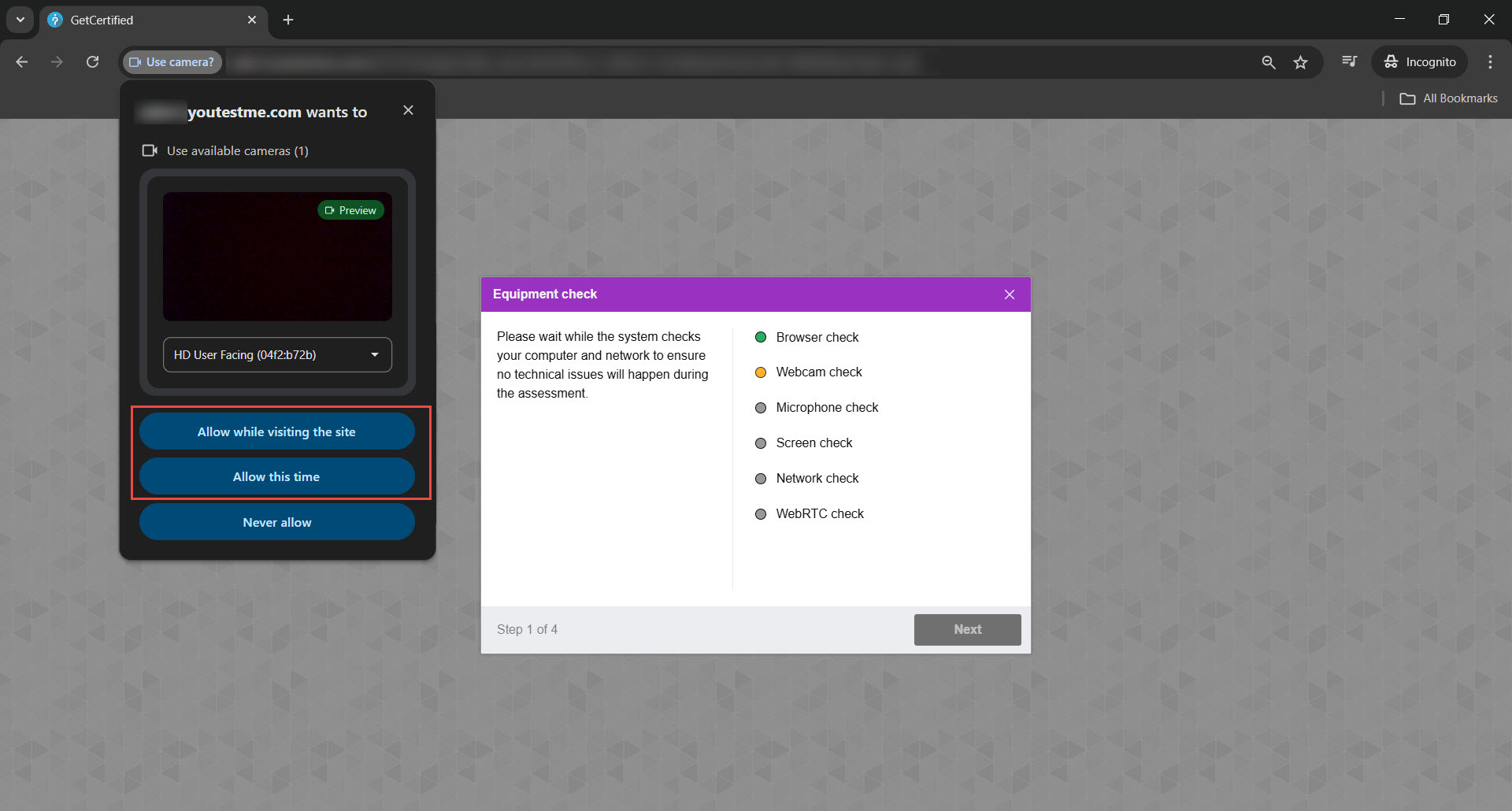
When you begin the exam, your browser will prompt you to allow access to your camera. To enable this, select one of the following options:
- Allow while visiting this site
- Allow this time
Choosing either option will grant the necessary permissions for the exam to proceed smoothly.
Using Google Chrome
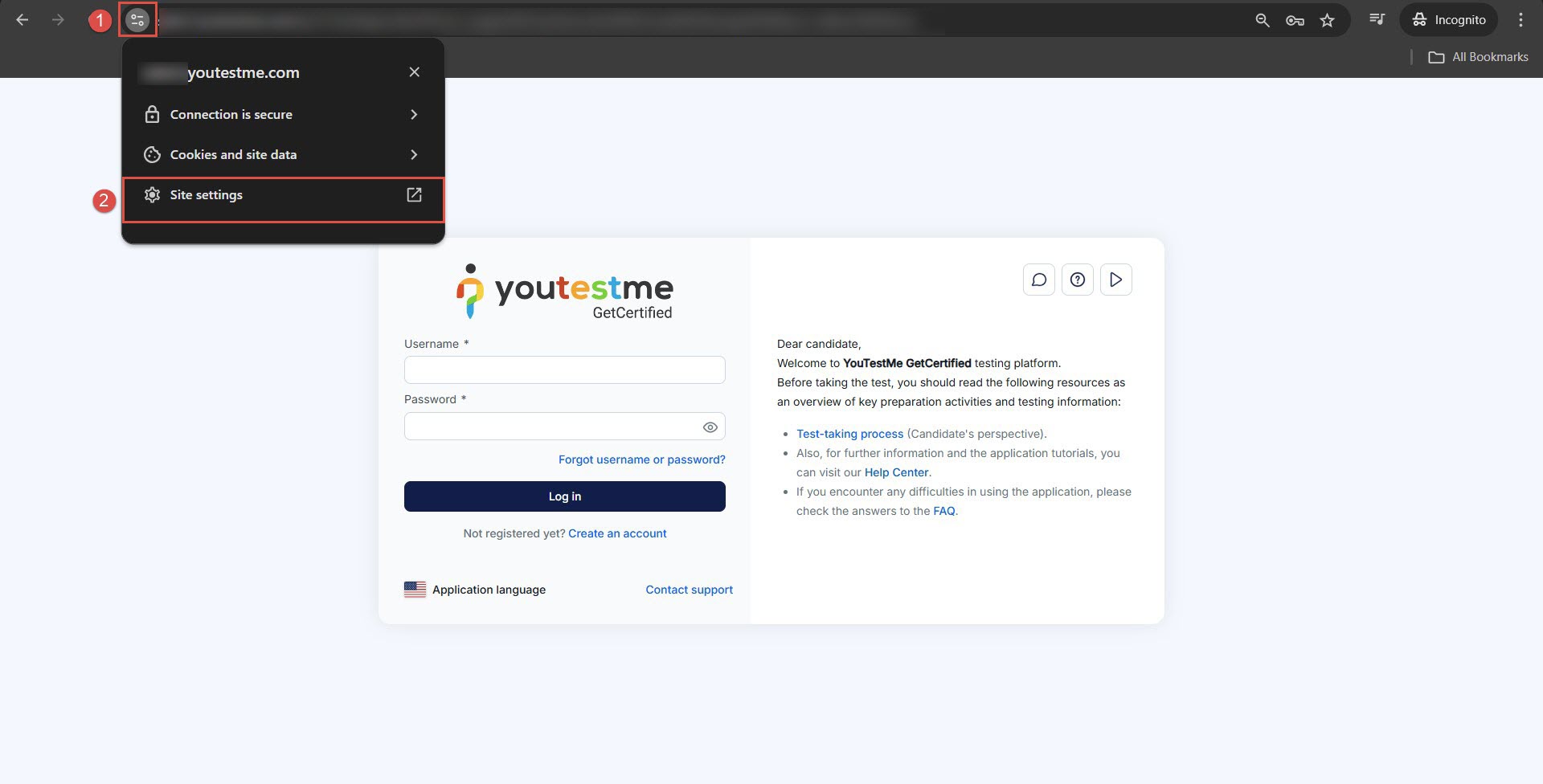
If you are using Google Chrome and you need to allow the browser access to the webcam manually, follow these instructions:
- Click the site information icon in the left corner of the address bar.
- Select the Site Settings option.
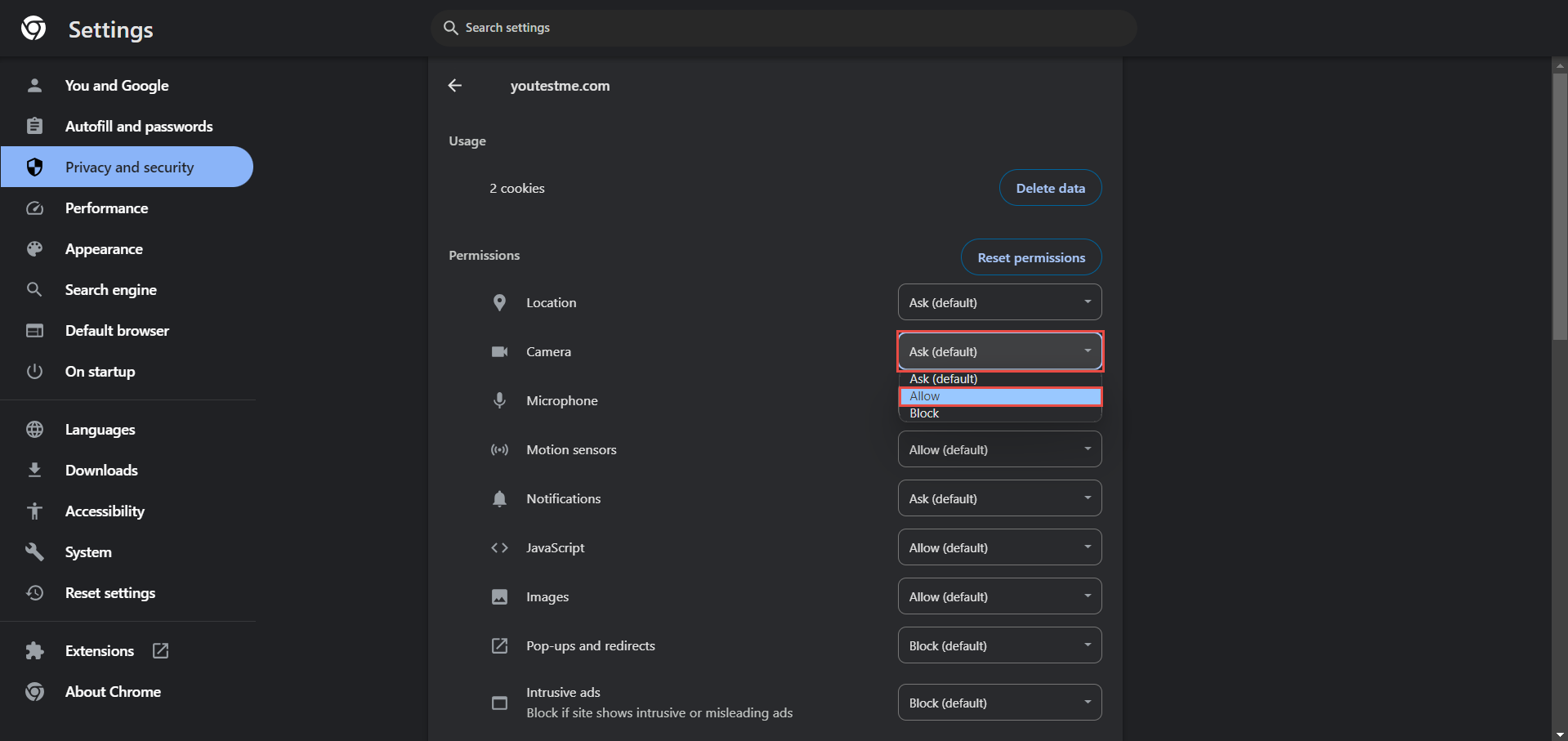
- On the Site Settings webpage, click the dropdown menu next to the camera icon and select Allow.
Using Mozilla Firefox
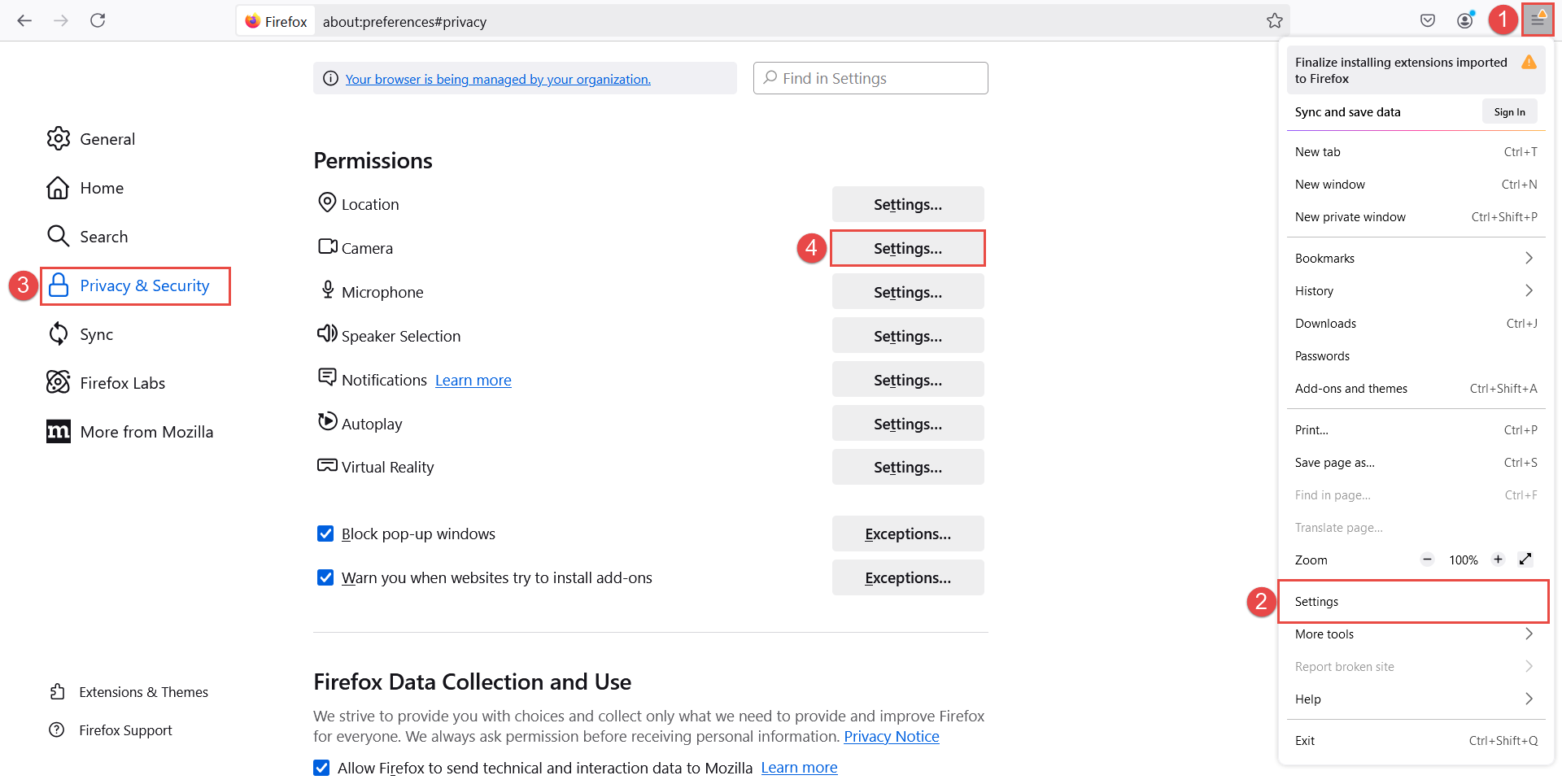
Follow the steps below to allow camera access for the website:
- Click the menu button
 .
. - SelectSettings.
- Select Privacy and Security
- Scroll to the Permissions section and click the Settings button.
Find the exam website in the webcam permission dialog and select “Allow” or “Always Ask.”

Checking Camera Permission in Your Computer’s Settings – Windows
In addition to browser permissions, camera access is also managed through Windows privacy settings. Make sure that camera access is enabled for both the system and individual apps in your computer’s settings:
- Open Camera privacy settings.
- Confirm that camera usage is allowed.
- Scroll down the page and confirm that camera usage is permitted for the browser you are using for taking a test.
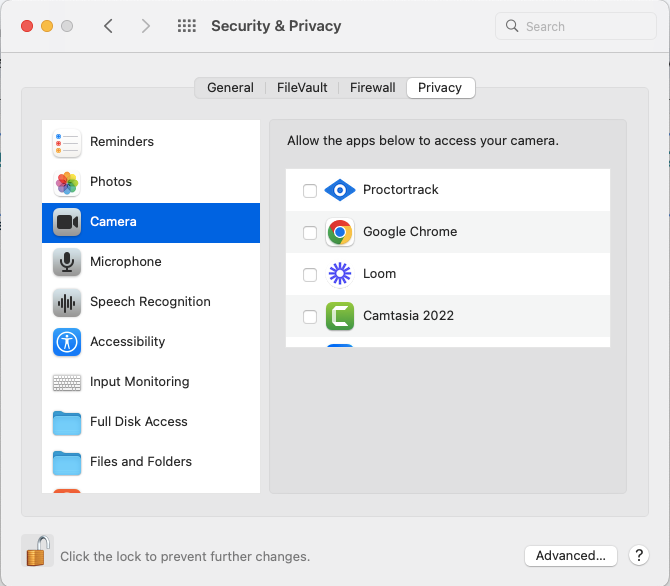
Checking Camera Permission in Your Computer’s Settings – MacOs
- Choose the Apple menu
 and navigate to System Settings
 - Click Privacy & Security
 in the sidebar.
 - Click Camera.
- Turn on camera access in the browser you use to take the exam.
Using a USB Webcam
On Google Chrome
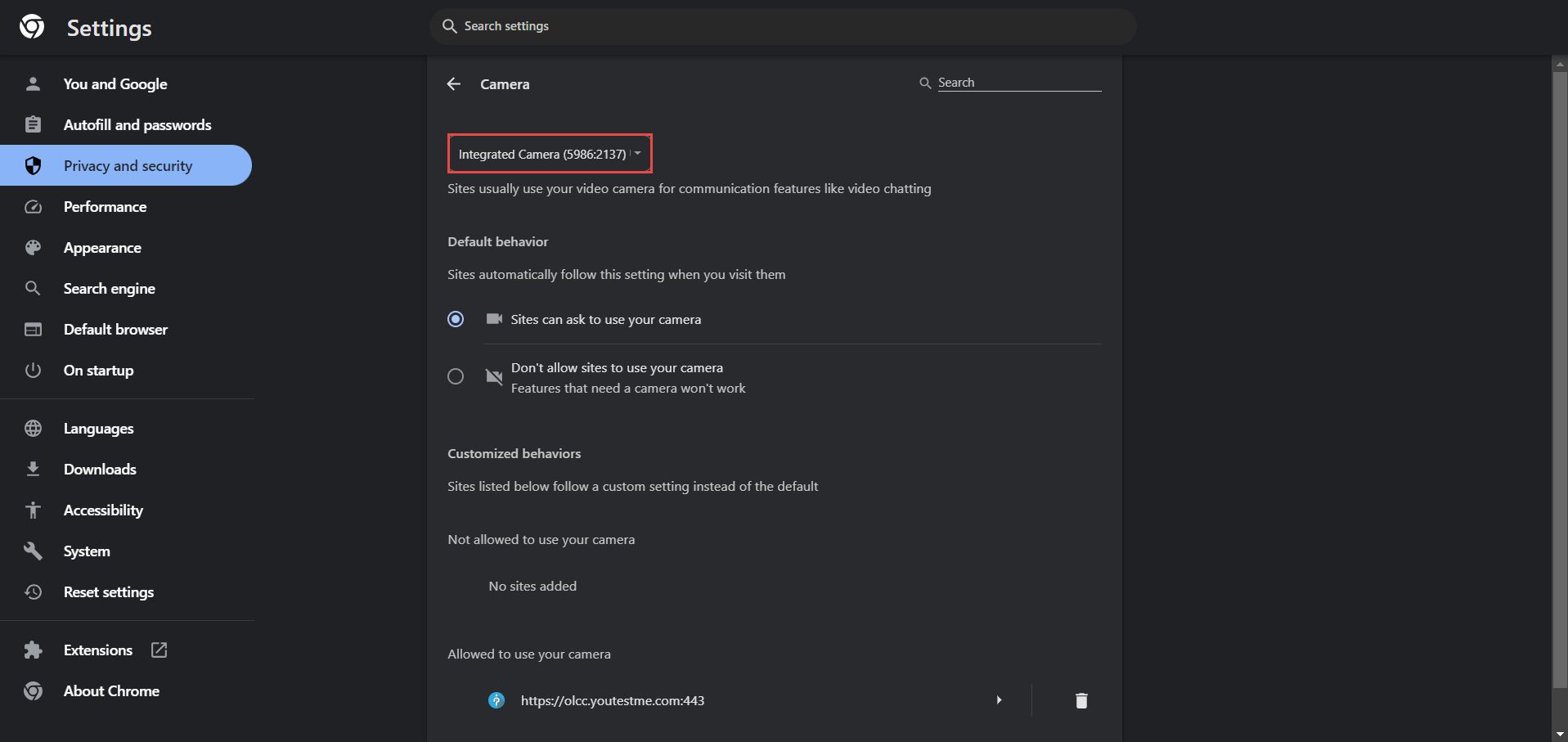
If you are using a USB Webcam, you may need to change the default camera used by the browser. To select the correct camera that Google Chrome should use, follow the steps below:
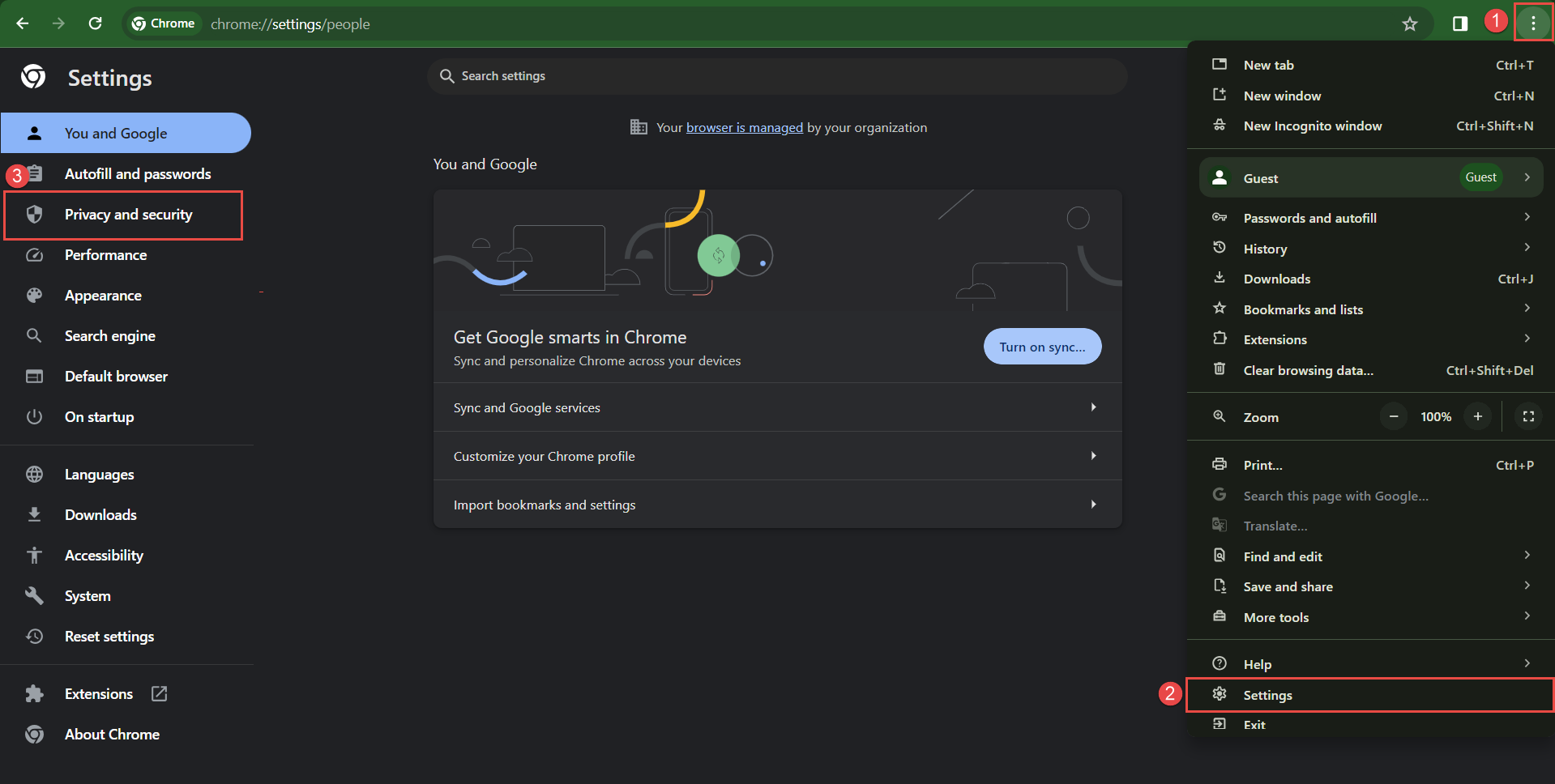
- Click the three dots icon in the top right corner of your browser window.
- Navigate to Settings.
- On the left side, select Privacy and Security.
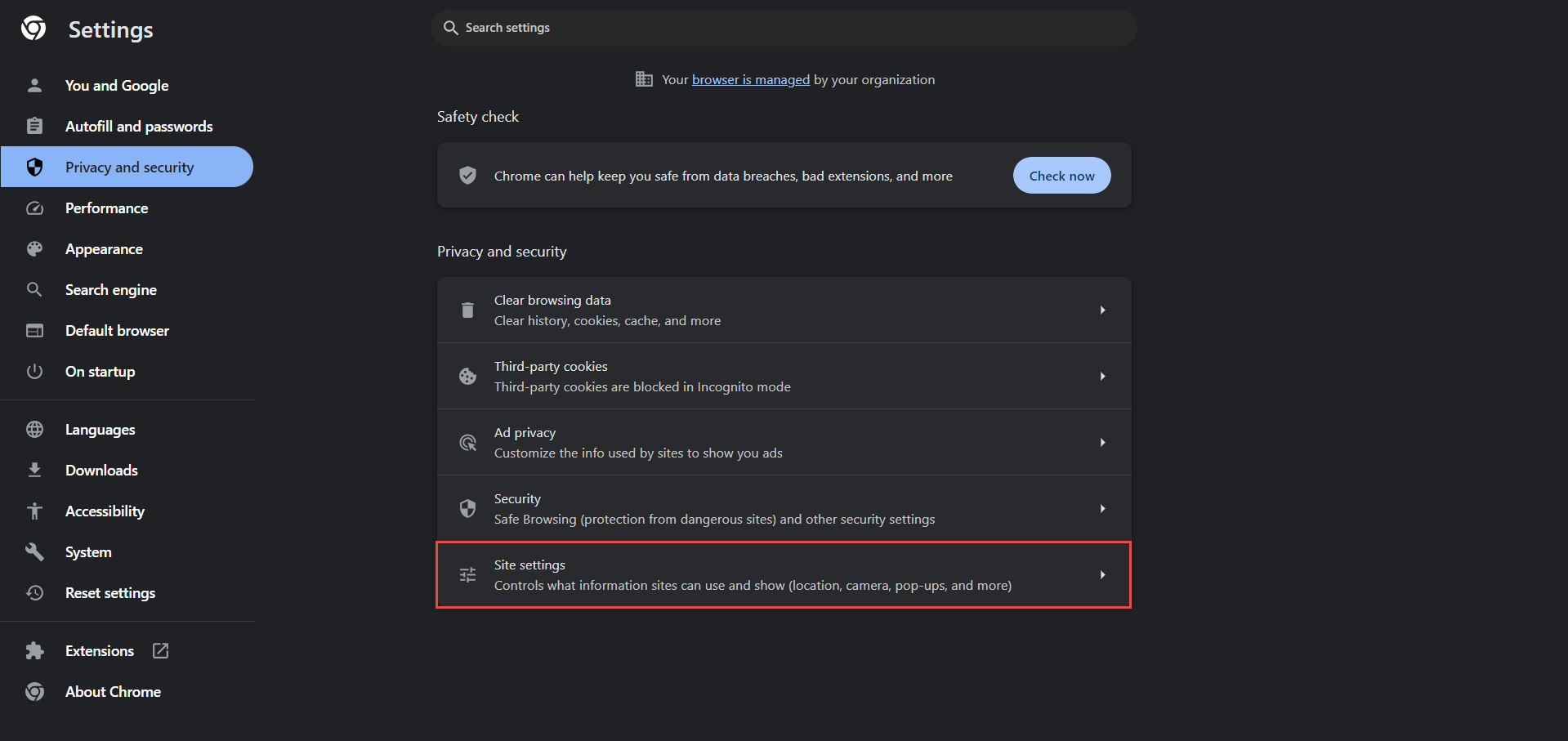
- Select Site Settings.
Navigate to the permissions section and select Camera.
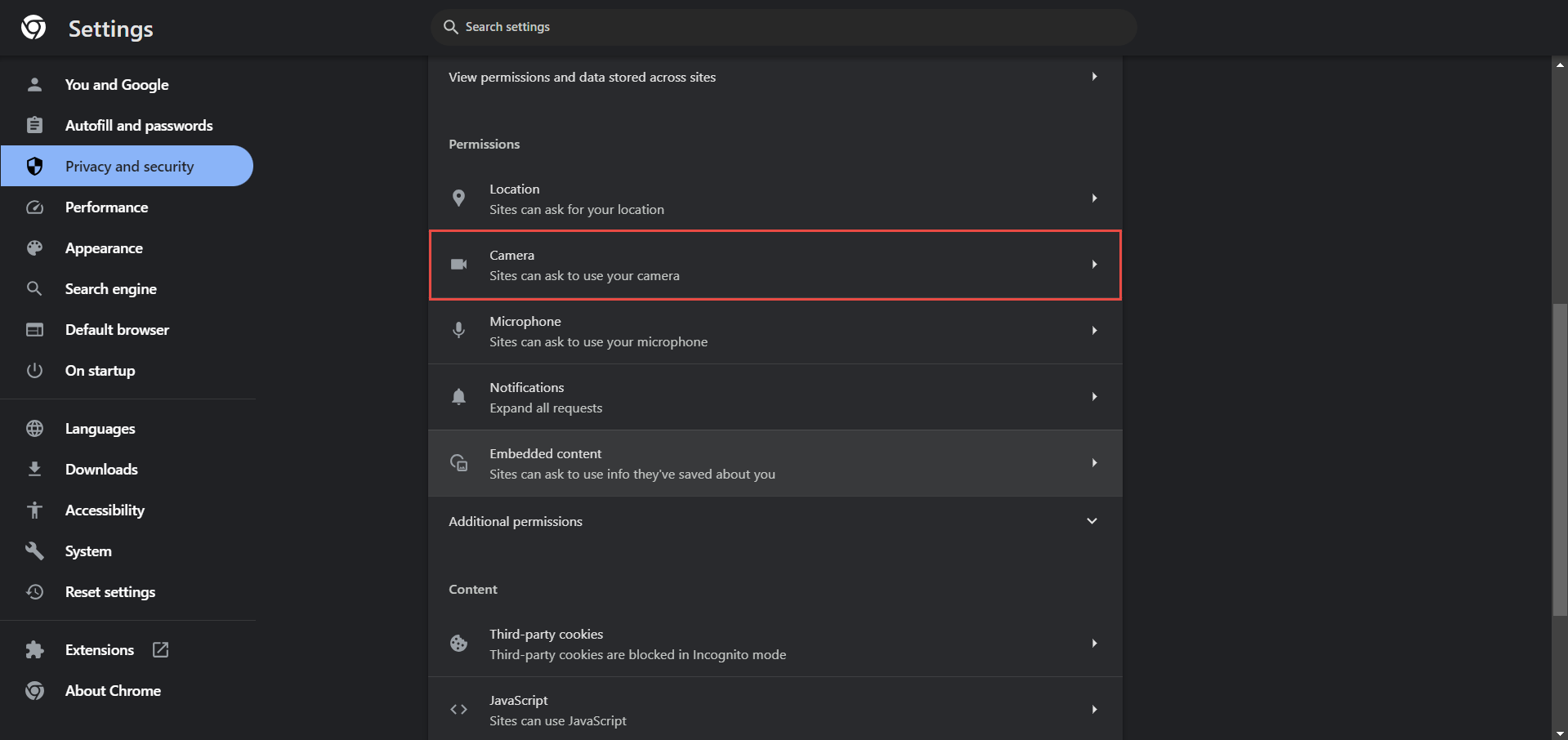
- In the drop-down menu, select the USB camera.
Using Mozilla Firefox
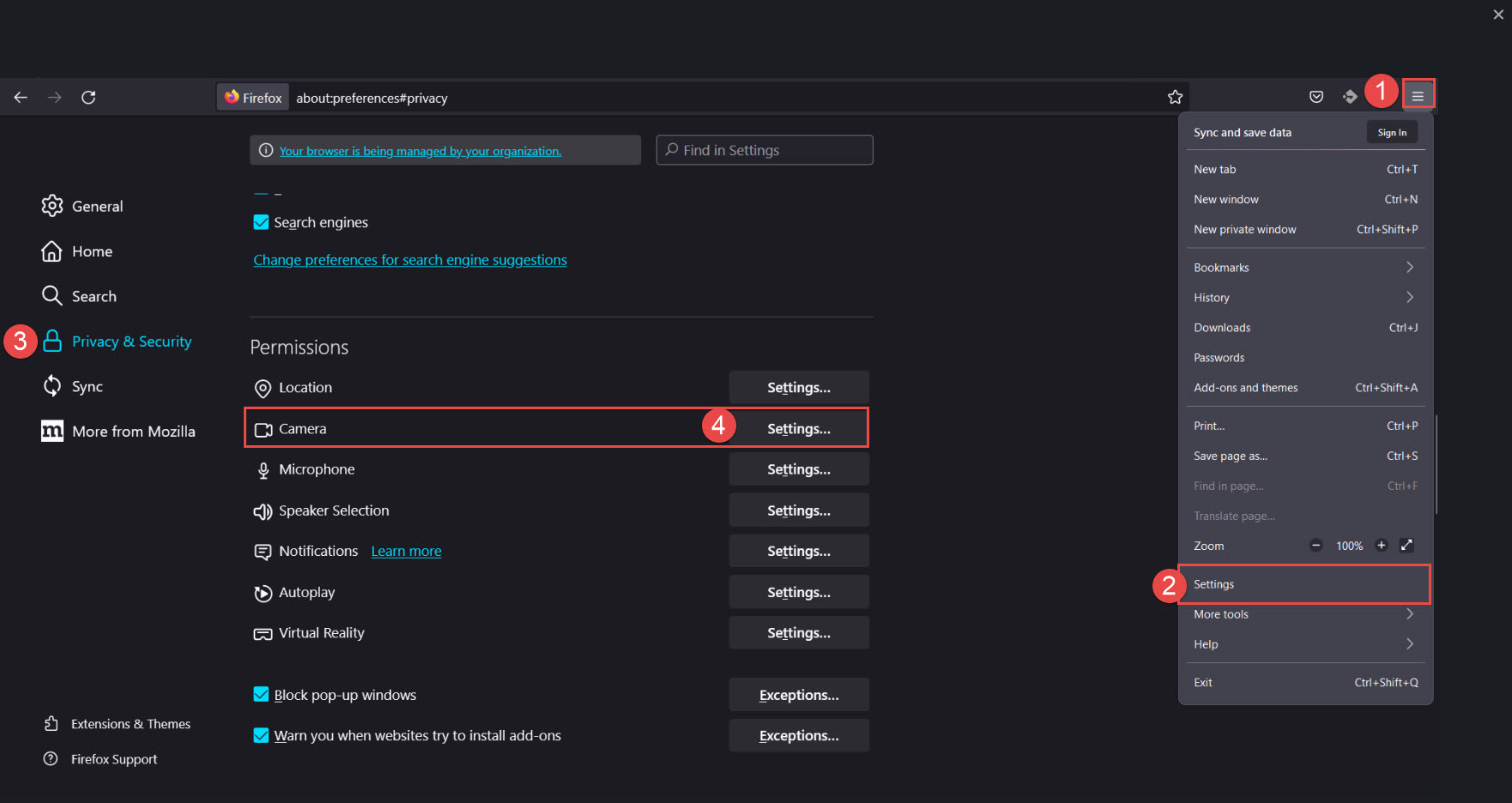
If you are using Mozilla Firefox, follow these instructions:
- Click the three-line icon in the top right corner of your browser window.
- Navigate to the Settings.
- On the left side, select Privacy & Security.
- Scroll down to find camera settings and click on the Settings button. When the pop-up window appears, you can specify which websites are allowed to access your camera.
Changing the camera used in your Windows Settings
To use an external camera, you may need to manually change the selected camera in your system settings by following the steps below:
- Press Windows + X, and click Device Manager.
- Click Camera devices.
- Right-click on the integrated webcam.
- Click Disable device and ensure your external camera is recognized.

The webcam is disabled during the test
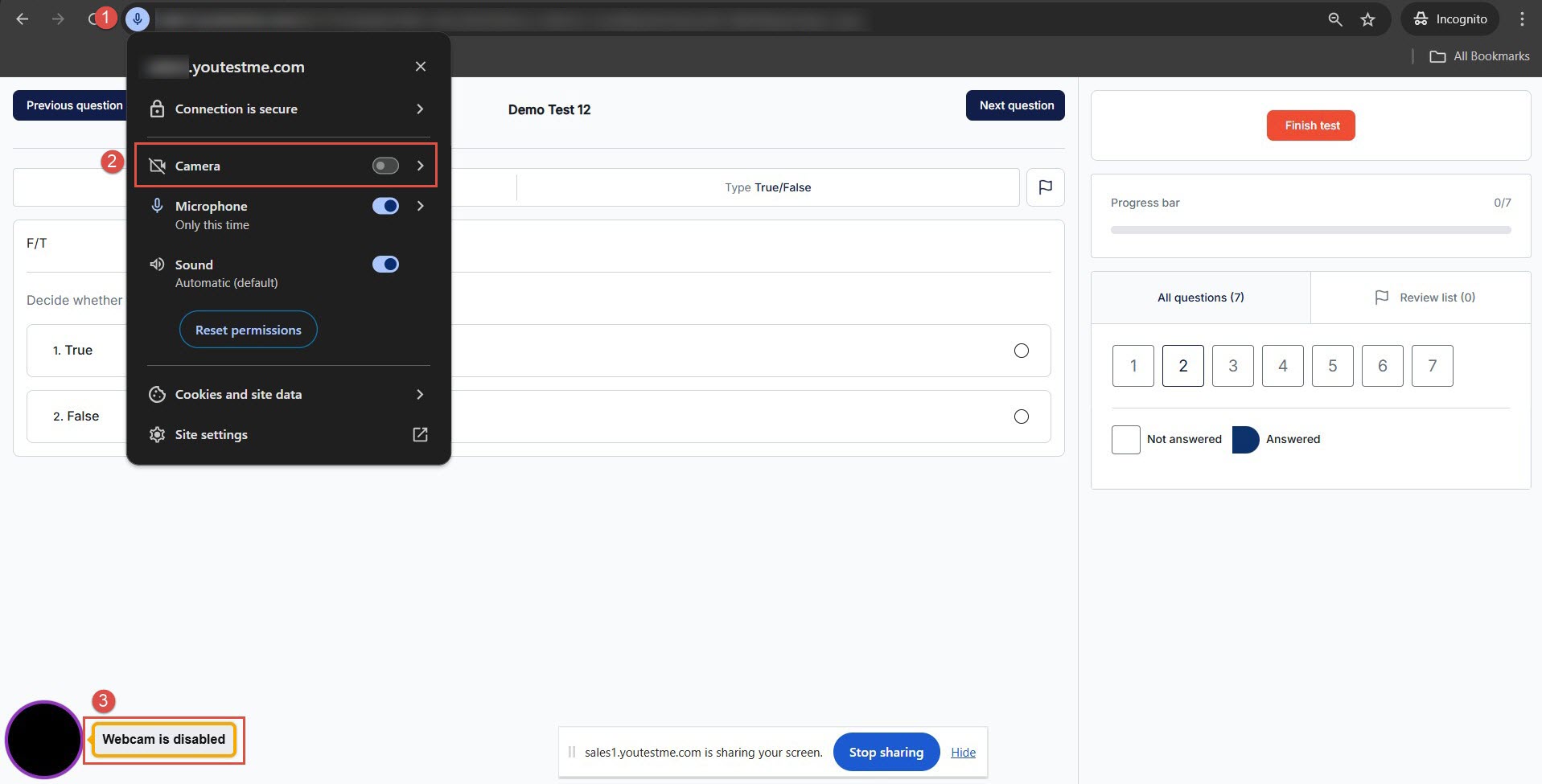
If the camera stops working during the test due to internet connection issues, follow these steps to resolve the problem:
- Click on the site information icon in the address bar’s left corner.
- Enable the camera permission from the dropdown menu.
- After enabling the camera permission, click the “Webcam is disabled” notification.
Alternatively, you can refresh the exam tab. You will have to pass the equipment check steps. Please do not worry; your progress will not be lost, and you can continue from where you left off.
Best Practices and Tips
- If none of these solutions work, you may want to consider using an external camera or another laptop.
- It’s advisable to use your personal device for the test, as company devices may have security restrictions that block access to the camera. Without administrator permission, changing these security settings to allow the website to use your camera is impossible.
- Please watch the video for more information on the test-taking process from the candidate’s perspective.
- To see frequently asked questions about proctored tests, please see the FAQ.